The Creator Brief FAQ: How Brands Can Give Direction Without Killing the Creative?
Fabulate’s Nathan Powell explains how brands can give creators clear direction without scripting the content, overloading the message or killing what makes it work.
What is a creator brief?
A great creator campaign does not start with a post. It starts with a brief. A creator brief is the foundation of any influencer or creator marketing campaign.
It sets out what the brand is trying to achieve, who the content needs to reach, what must be included, what should be avoided, and what the creator is expected to deliver.
Without one, creators are playing the guessing game of what the brand actually needs. Creator briefs apply across almost every type of paid collaboration, from Instagram Reels and TikTok videos to YouTube integrations, newsletter sponsorships, UGC-style assets and long-form content partnerships.
The format may change depending on the platform, but the fundamentals stay the same: a clear objective, a clear audience, clear non-negotiables, and enough creative freedom for the creator to do what they do best.
What makes a good creative brief?
The difference between a good one and a bad one is just asking three questions;
- What are we trying to achieve?
Not talking about the deliverables. The actual objective of the campaign. Are we trying to drive awareness, consideration, app downloads, sales, changes in brand perception, or something else?
- Who are we talking to?
Most of the time, creators are more intimate with their audiences than the brand is. Give them a clear understanding of the target audience and the insight behind the campaign.
- What absolutely must land?
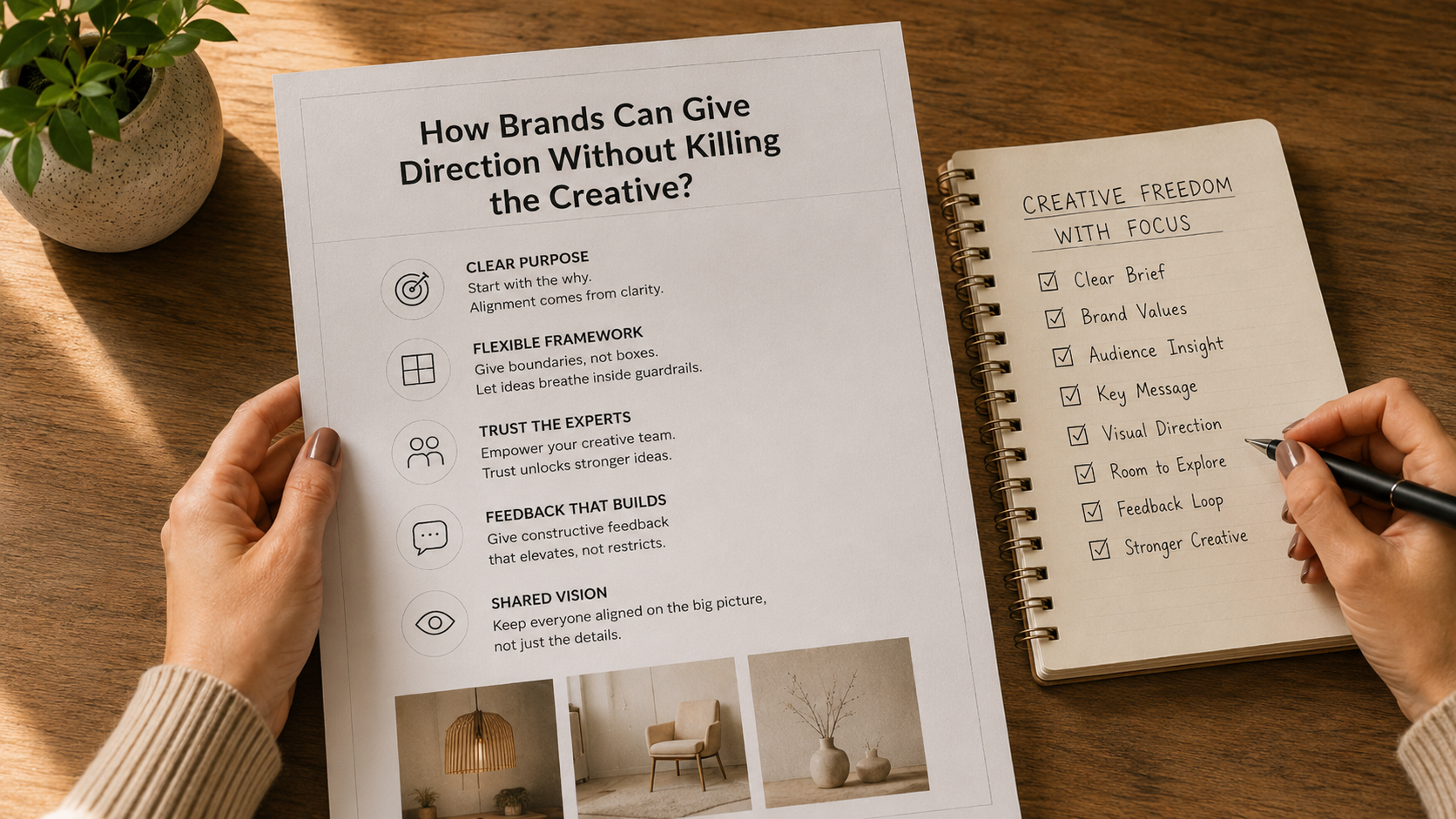
Key messages, legal requirements, product truths, mandatory branding elements, and any category-specific restrictions — all of these should paint a clear picture for the creator. The key to the best content creation is unlocked when creators understand the destination but are trusted to choose the route.
Where do brands miss in the briefing process?

Creating a bad one is easy; give them a script that controls their every word and action.
Or, in the words of Fabulate’s Nathan Powell, treating creators like “production companies rather than creative partners.”
Powell explains that brands can go overboard with pages explaining exactly what the creator needs to do, say, wear, film, and edit, but spend very little time explaining why the campaign exists in the first place.
Though they technically follow the brief, the result is clear to the audience. Unnatural content that makes them scroll up.
Another common mistake is overloading creators with messages.
“If you have six key messages, your audience will probably remember none of them.” Powell says
The best creator campaigns Powell highlights usually revolve around one central idea that can be communicated simply and authentically. Not a billion.
Non-negotiable for brand vs what should be left to the creator?
Fabulate’s ideology frames it as a choice between brand truth and creator expression.
Non-negotiables set the campaign strategically correct:
- Legal requirements
- Product claims
- Mandatory brand messaging
- Key campaign objectives
- Brand safety considerations
Rest should generally be open to the creator's interpretation:
- The storytelling format
- The hook
- The humour
- The filming style
- The language used
- The way the creator naturally integrates the product
“If a creator's audience follows them because of their personality, then removing that personality from the content defeats the entire reason you hired them,” Powell states.
Should brands brief creators around the product, the customer problem, or the campaign outcome?
The ideal answer should be all three, but if Powell had to prioritise one, it would start with the customer problem.
“Consumers rarely wake up wanting a product. They wake up with a need, a frustration, an aspiration, or a challenge.”
Creators are particularly good at translating those real-world moments into content that feels relatable. They can take a product message and place it in an everyday scenario that their audience actually understands.
The product is the solution. The campaign outcome is the business objective. But the customer problem is usually what makes the content feel human.
Powell explains that it is what stops creator content from being an ad.
Briefing for paid social is a different ball game
Now, that's a trap many brands get caught in. “Organic creator content and paid creator content are often trying to achieve different things.”
Organic content: creators can lean heavily on community engagement and audience familiarity.
Paid social content: the content has to work for people who have never seen that creator before.
What that means is a greater emphasis on:
- Strong opening hooks
- Clear branding integration
- Product demonstration
- Audience targeting
- Conversion objectives
- Testing opportunities across multiple creative variations
“When creator content is being used as media, brands are not just briefing for engagement anymore.”
They are briefing for performance.
That is why creators should be treated as creative strategists and content producers, not simply distribution channels.
Can creators provide feedback after the brand has finalised the brief?

One word. Absolutely.
Powell says the best campaigns improve significantly when a creator challenges the original concept.
“Creators spend every day understanding what their audience responds to. Brands spend every day understanding their business.”
The strongest work is achieved when those two perspectives come together.
That doesn't give creators a reason to rewrite the entire strategy, but an opportunity to provide feedback on the following:
- Whether the concept feels authentic
- Whether the audience will respond to it
- Whether the content format makes sense
- How the idea could be improved for the platform
Powell concludes in short, the best briefing process isn't a handover. It's a collaboration.
“If a creator feels they can't challenge the brief, you're probably leaving some of the most valuable expertise in the room untapped.”
.jpg)






.png)

.png)
.png)
.png)
.png)
.png)
.png)
.png)
.png)
.png)
.png)
.png)
.png)
.png)
.png)
.png)
.png)
.png)
.png)
.png)
.png)
.png)
.png)
.png)
.png)
.png)
.png)
.png)
.png)


.png)