.png)
Beyond ROI: Why Attention, Context and Format Strategy Are Defining the Next Era of TikTok Performance
ROI is no longer the full story. As econometric data sharpens our understanding of TikTok performance, a new framework is emerging, one built on attention quality, contextual relevance and deliberate format strategy. This piece explores why sustainable growth depends on engineering impact, not just reporting efficiency
Marketing has entered a phase where every dollar is interrogated. CFOs want proof. Boards want clarity. Marketing leaders want confidence that their media mix is not just active, but effective.
For years, ROI has been the headline number. It is neat. It is comparable. It travels well in board decks.
Recent econometric analysis from Ebiquity, reviewing 12 months of UK retail and telco data, reinforces something we have seen building for a long time. TikTok performance is not a story about the cheapest CPM or the most efficient click. It is a story about the relationship between cost, attention, context and commercial impact.
At Fabulate, that has been our working assumption for years. As Nathan Powell, Co Founder and Chief Product Strategy Officer, puts it: “We’ve been watching the attention economy mature in real time. The brands winning on TikTok are not chasing vanity metrics, they’re engineering impact. The econometric data is simply catching up with what strong marketers have already sensed.”
That shift in thinking reframes how brands should approach the platform.
ROI Is the Starting Line, Not the Strategy
Two campaigns can deliver the same ROI while driving completely different commercial outcomes.
For example:
- Campaign A buys impressions at a $5 CPM and generates $10 in revenue per 1,000 impressions.
- Campaign B buys impressions at a $15 CPM and generates $30 in revenue per 1,000 impressions.
Both deliver an ROI of 2.0. For every $1 invested, $2 comes back.
On paper, they look identical.
But Campaign A works because it is cheap. Each impression generates a relatively modest impact. If media costs rise, performance quickly weakens. The model is fragile.
Campaign B costs more, but each impression works significantly harder. It generates materially higher revenue per impression. There is more headroom. More resilience. Stronger incremental contribution. More resilience and more meaningful incremental contribution.
The ratio is the same. The quality of growth is not.
“ROI tells you what happened. It doesn’t tell you why it happened,” Powell says. “Once you separate cost from impact, you can see where the leverage actually sits.”
Efficiency and effectiveness are distinct. CPM reflects what you paid. Incremental revenue reflects what you gained. Sustainable growth depends on understanding how those two forces interact.
Inside Fabulate campaigns, we see this repeatedly. Brands that optimise solely for cost tend to buy reach without resonance. Brands that design for impact, sequencing formats deliberately and investing in creative quality, tend to see stronger commercial returns.
Premium Formats Are Not Expensive. Weak Impact Is.
One of the clearest signals in the Ebiquity review is the performance of premium placements such as TopView, TopFeed and contextual environments like Pulse. In retail scenarios, some of these formats generated multiple times the revenue per thousand impressions compared to standard auction activity.
The instinct to default to the lowest CPM is understandable. Budget pressure conditions marketers to equate cost with risk.
Yet when uplift is factored in, the so called expensive format can deliver a lower cost per sale.
The key is orchestration. Premium formats, auction formats, brand building and performance activity should not compete with each other. They should be sequenced and aligned around a commercial objective.
Without structure, format decisions become reactive. Budgets get shifted based on surface level metrics rather than incremental impact. With the right workflow and visibility, brands can plan deliberately, measure properly and optimise with confidence.
When you give brands more intelligence around format performance, creator alignment, contextual relevance and commercial uplift, decision-making shifts. Conversations move away from cheapest CPM and towards incremental impact. Optimisation becomes disciplined rather than reactive.
.png)
Attention Is the Commercial Lever
Perhaps the most compelling correlation surfaced in the analysis is the relationship between average play duration and revenue uplift.
Longer watch time correlates with stronger incremental sales impact.
For Fabulate, this reinforces a position we have held for years. Attention quality drives business results.
“We’ve backed view through rate as a serious performance indicator for a long time,” Powell says. “If people aren’t watching, they aren’t remembering. And if they’re not remembering, they’re not buying.”
That is why we are all on VTR. Not as a vanity engagement metric, but as a proxy for creative strength and memorability.
Creative execution becomes critical.
Introduce the brand within the first two seconds. Build for sound on environments. Keep duration concise. Design natively for TikTok rather than repurposing television assets.
Sustained attention compounds impact, while passive impressions do not.
Context Changes Value
Another important theme from the econometric findings is contextual relevance.
Ads placed alongside culturally aligned content often delivered stronger revenue impact per view than standard feed placements, even when completion rates appeared comparable.
In practice, adjacency matters. Cultural fit matters. Creator alignment matters.
“Not all impressions carry the same weight,” Powell says. “Where your message appears shapes how it’s received. Context can amplify impact or dilute it.”
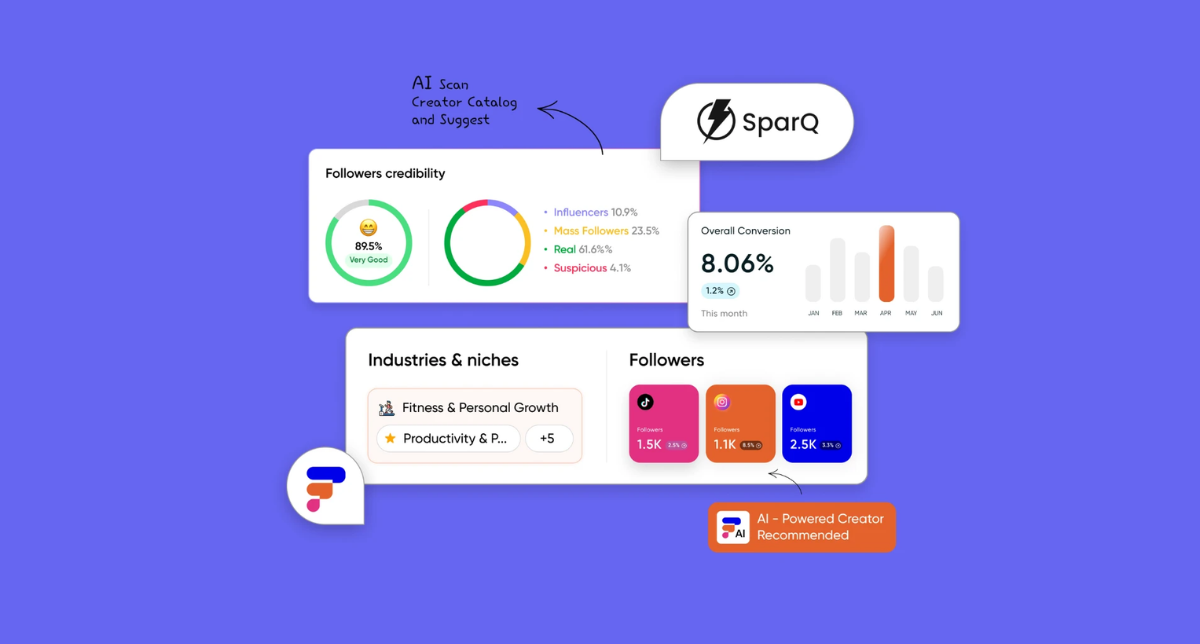
This thinking sits at the heart of Fabulate’s Discovery and SparQ products. Creator selection is not simply about audience size. It is about contextual alignment, brand safety signals and cultural resonance.
Marketers who treat impressions as interchangeable miss this nuance. Those who build contextual intelligence into their workflow unlock incremental value.
.png)
Omnichannel Impact Is Real
The analysis also confirms that TikTok drives impact beyond digital conversion.
Retail campaigns saw measurable uplift in physical stores. Telco activity influenced online, in store and call centre sales.
Digital only attribution frameworks risk materially understating contribution.
“The platform might be mobile, but the sale might not be,” Powell says. “If you’re not measuring across the full funnel, you’re undercounting growth.”
Granular data access and MMM integration matter. When TikTok is modelled as part of a broad social bucket, insight is limited. When format and objective level data are available, optimisation becomes far more precise.
Fabulate’s integrated workflow and reporting infrastructure are designed to support that level of clarity.
Rethinking the Funnel
The assumption that lower funnel objectives automatically outperform awareness led activity does not always hold.
Reach and Frequency activity often delivered strong ROI at lower CPMs. Conversion objectives sometimes incurred higher costs without proportionally higher uplift.
This is not an argument against performance formats. It is a reminder that objective selection must align with strategic intent.
“If you optimise for views, you’ll get views,” Powell says. “If you optimise for incremental revenue, you need to measure against incremental revenue.”
Sequencing brand formats to build consideration, followed by performance formats to convert that momentum, frequently delivers stronger total return than treating the two as competing priorities.
Where This Leaves Brands
Cheap reach without impact will not satisfy boards. Surface level engagement metrics will not sustain growth. Attention quality, contextual alignment, format strategy and omnichannel measurement now define best practice.
For Fabulate, these are not new ideas. We have seen these patterns emerging across campaigns for years. The recent econometric validation reinforces what our own data has consistently shown.
As Powell puts it: “Marketers who treat TikTok as cheap performance social will keep chasing diminishing returns. The evidence increasingly shows it behaves more like premium brand media. If you design for attention and measure incrementality, you build durable advantage.”
Beyond ROI lies a more sophisticated framework for growth. For brands prepared to move from reporting performance to engineering it, the blueprint is already in front of them.
.jpg)











.png)

.png)
.png)
.png)
.png)
.png)
.png)
.png)
.png)
.png)
.png)
.png)
.png)
.png)
.png)
.png)
.png)
.png)
.png)
.png)
.png)
.png)
.png)
.png)
.png)
.png)
.png)
.png)



.png)