YouTube’s CEO Just Drew a Line in the Sand. Creators In, AI Slop Out.
YouTube has made its position clear: creators are the future, and low-quality AI content is not. This article unpacks why that line in the sand matters for creators, brands and the wider media industry, and why authenticity remains the most valuable currency in modern video.
It is difficult to talk about video culture today without talking about YouTube.
For more than twenty years, YouTube has shaped how the world watches video. It changed when we watch, what we watch, and who gets to make it. Long before “creator economy” became a boardroom phrase, YouTube was already proving that distribution no longer belonged exclusively to studios, networks or broadcasters.
Today, YouTube reaches more than two billion logged-in users every month and is watched in almost every country on the planet. It lives on phones, laptops, smart TVs, tablets and gaming consoles. In many homes, YouTube does not complement television. It has replaced it.
What makes YouTube different is not just scale. It is how people actually use it.
Viewers do not come to YouTube to be programmed. They come to follow interests, personalities and communities. Long-form videos sit comfortably alongside Shorts. Livestreams live next to podcasts, music, episodic series and deep fandom content. It is one of the few platforms that supports both speed and depth, virality and longevity.
Over time, this has fundamentally changed how video content is created and valued. Creative risk no longer requires permission. Production is no longer gated by access to studios. Audiences, not executives, decide what scales.
And this shift is not theoretical. It has real economic weight behind it.
In September, YouTube confirmed it has paid out more than $100 billion to creators, artists and media companies since 2021. Earlier in the year, analysts at MoffettNathanson estimated that if YouTube were a standalone business, it would be worth between $475 billion and $550 billion.
Those numbers matter, not as bragging rights, but as proof. YouTube is not a side platform to the entertainment industry. It is one of the most valuable media businesses in the world, built largely on the backs of creators.
As Nathan Powell, co-founder of Fabulate, puts it, “When a platform of YouTube’s scale makes a philosophical call, not just a product one, the entire creator ecosystem feels it. This is not about features. It is about what kind of content gets rewarded, and what quietly disappears.”
That is why YouTube’s latest CEO letter matters.
Not as a piece of corporate thought leadership, but as a signal. When YouTube talks about the future, it is not speculating from the sidelines. It is reflecting on a system it helped build, and one it actively shapes every day.
And in this letter, YouTube draws a clear line around what it wants the platform to be next.
Creators are in and AI slop is out.
Creators Are No Longer “UGC”. They Are the Studios.
One line from the letter stands out more than any product update or metric.
“When creators hold the keys to their own production and distribution, the only limit is their imagination.”
This is YouTube acknowledging what the industry has been slow to fully accept. Creators are not filling gaps in a media plan. They are building the shows.
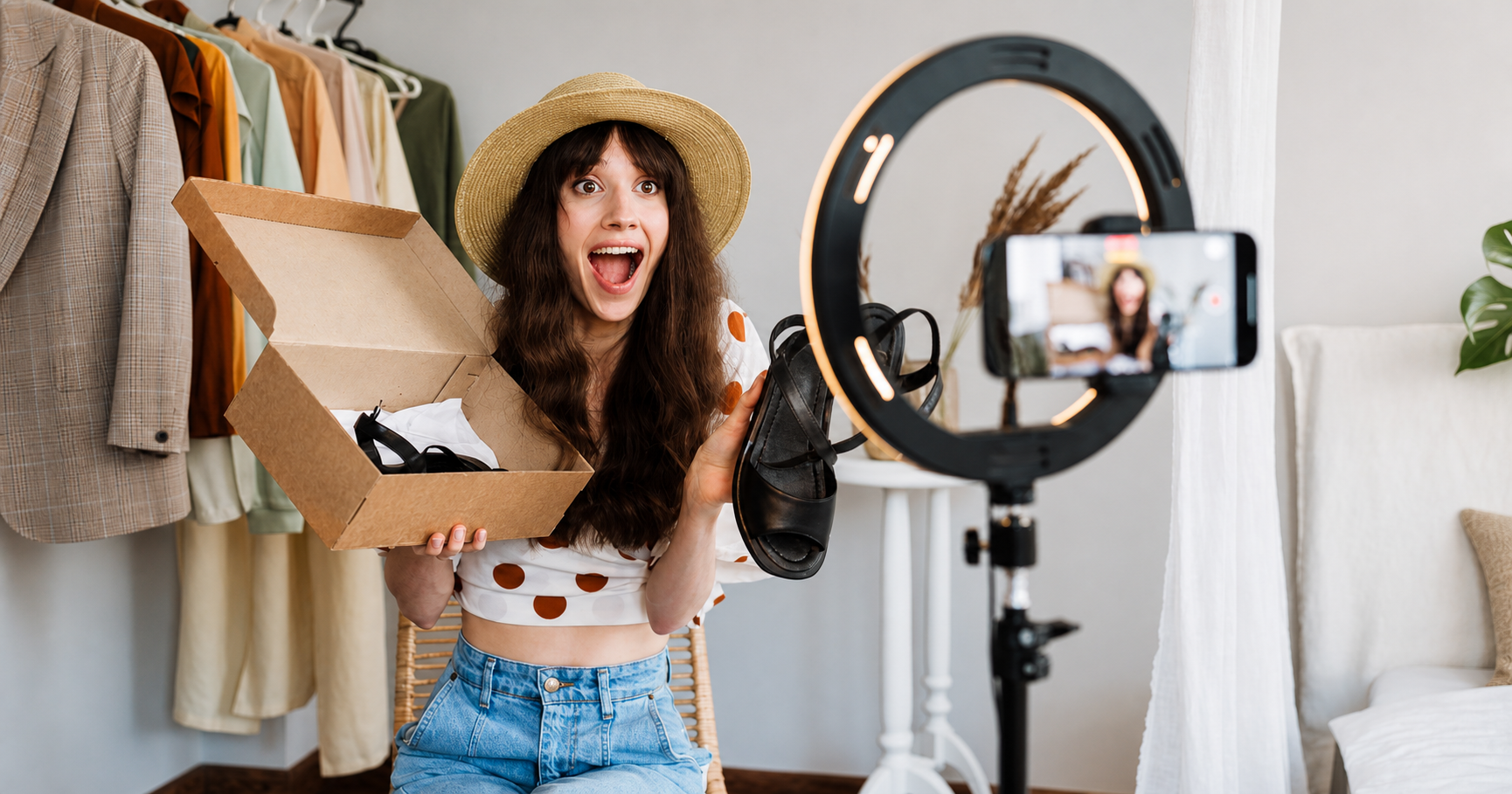
From creator-led Super Bowl coverage to red carpet reporting at the Oscars, to the immersive fandom moments surrounding a Taylor Swift or BTS release, YouTube positions creators as the primary way culture is experienced. Not as commentary after the fact, but as the front row.
The era of dismissing this work as “UGC” is over. YouTube says it directly. Creators are buying studio-sized lots, producing premium formats and green-lighting their own ideas. They are building media companies in public, without asking for permission.
This shift towards creator-owned production is something Powell sees as fundamental to why creator content continues to outperform traditional brand-led work.
“The reason creator-led shows work is not production value. It is authorship,” Powell says. “Audiences can tell when something is made by someone who owns the idea, not someone executing a brief. Authenticity is not a buzzword. It is a structural advantage.”
At Fabulate, this distinction shows up repeatedly in performance. Creator content does not work because it is native to the platform. It works because it is human.

YouTube Is the New TV Because Creators Are the New Prime Time
YouTube being the number one streaming platform in the US is not a technology story. It is a creator story.
Long-form, Shorts, livestreams, podcasts, music and episodic content all coexist because creators understand how audiences actually behave. The Ms Rachel Emmy nominations are not a novelty. They are a sign that the industry is finally recognising creator-led content as legitimate entertainment.
YouTube TV’s continued investment in customisation and control reinforces the same belief. Viewers do not want rigid schedules. They want relevance and they want content shaped by people who understand them, not by programming grids.
This shift also challenges how brands think about scale and effectiveness.
“We used to optimise for reach because there were only so many places you could show up,” Powell notes. “Creators changed the dynamic. Today, attention is something you earn by being relevant, not something you buy through repetition.”
For marketers, this reframes what prime time really means. The most powerful screen in the house is no longer owned by networks. It is owned by creators who understand attention, storytelling and community better than anyone.
A Real Creator Economy, Not a Side Hustle Narrative
YouTube does not talk about creators as a marketing channel, it treats them as an economy.
That is reflected in its continued investment in how creators earn. Shopping, brand deals, fan funding and frictionless commerce are positioned as core infrastructure, not add-ons. The platform is making it easier for brands and agencies to find creators, execute partnerships properly and build sustainable value on both sides.
But with that professionalisation comes responsibility.
“If platforms are treating creators like businesses, brands need to meet them there,” Powell says. “Authentic partnerships are built, not transacted. The work only scales when both sides take it seriously.”
This is where creator marketing either matures or stalls. The opportunity is enormous, but only if it is approached with intent rather than volume.
AI as a Tool, Not a Replacement
The most nuanced part of the letter is YouTube’s position on AI.
AI is not new to YouTube. It already powers discovery, moderation and accessibility. Over one million channels are using AI creation tools daily. AI is helping creators move faster, experiment more and reach broader audiences.
But YouTube draws a clear line. AI is there to support creativity, not replace it.
That distinction matters because it speaks directly to a growing frustration across platforms. Feeds filled with low-effort, repetitive, automated content that adds nothing and means nothing. YouTube calls it what most people already do. AI slop.
And it states clearly that it is actively working to reduce it.
Powell believes this is where authenticity becomes the deciding factor.
“AI should remove friction, not personality,” he says. “The moment content stops sounding like someone and starts sounding like something, audiences tune out. Responsible AI protects authenticity by amplifying human creativity, not flattening it.”
By actively reducing spam, clickbait and repetitive low-quality content, YouTube is backing creators who put thought, effort and originality into their work.
That is a creator-first move.
A Bet on Humans
The letter closes with a simple but powerful idea. The most important creator of the next decade is someone we have never heard of yet.
That is not a technology prediction. It is a belief in people.
YouTube is betting that the future of video will continue to be shaped by humans, not shortcuts. That technology should remove friction, not replace imagination. That platforms should build stages, not flood feeds.
For Powell, that belief cuts through all the noise around tools, formats and trends.
“The next generation of creators will not win because they use better tools,” he says. “They will win because they understand people better. Technology will always change. Human insight remains the differentiator.”
At Fabulate, this is the future we believe in. Creator content works because it is human. Because it carries context, culture and point of view. Because audiences can feel the difference.
YouTube just made that belief official.
And as we head into 2026, the line in the sand could not be clearer.
.jpg)






.png)

.png)
.png)
.png)
.png)
.png)
.png)
.png)
.png)
.png)
.png)
.png)
.png)
.png)
.png)
.png)
.png)
.png)
.png)
.png)
.png)
.png)
.png)
.png)
.png)
.png)
.png)
.png)
.png)


.png)