.png)
A practical guide to building Meta ads people actually stop for
Meta advertising is not about polish. It is about behaviour. Facebook and Instagram are habit platforms, opened reflexively and judged in milliseconds. After analysing thousands of high performing ads and creator led campaigns, this guide reveals the unspoken creative rules that decide whether ads disappear or scale. From why the first frame matters most to why creator style content consistently outperforms traditional brand creative, this is a practical playbook for building Meta ads that feel native to the feed and earn attention where it already lives. If your ads look good but do not perform, this explains why and how to fix it.
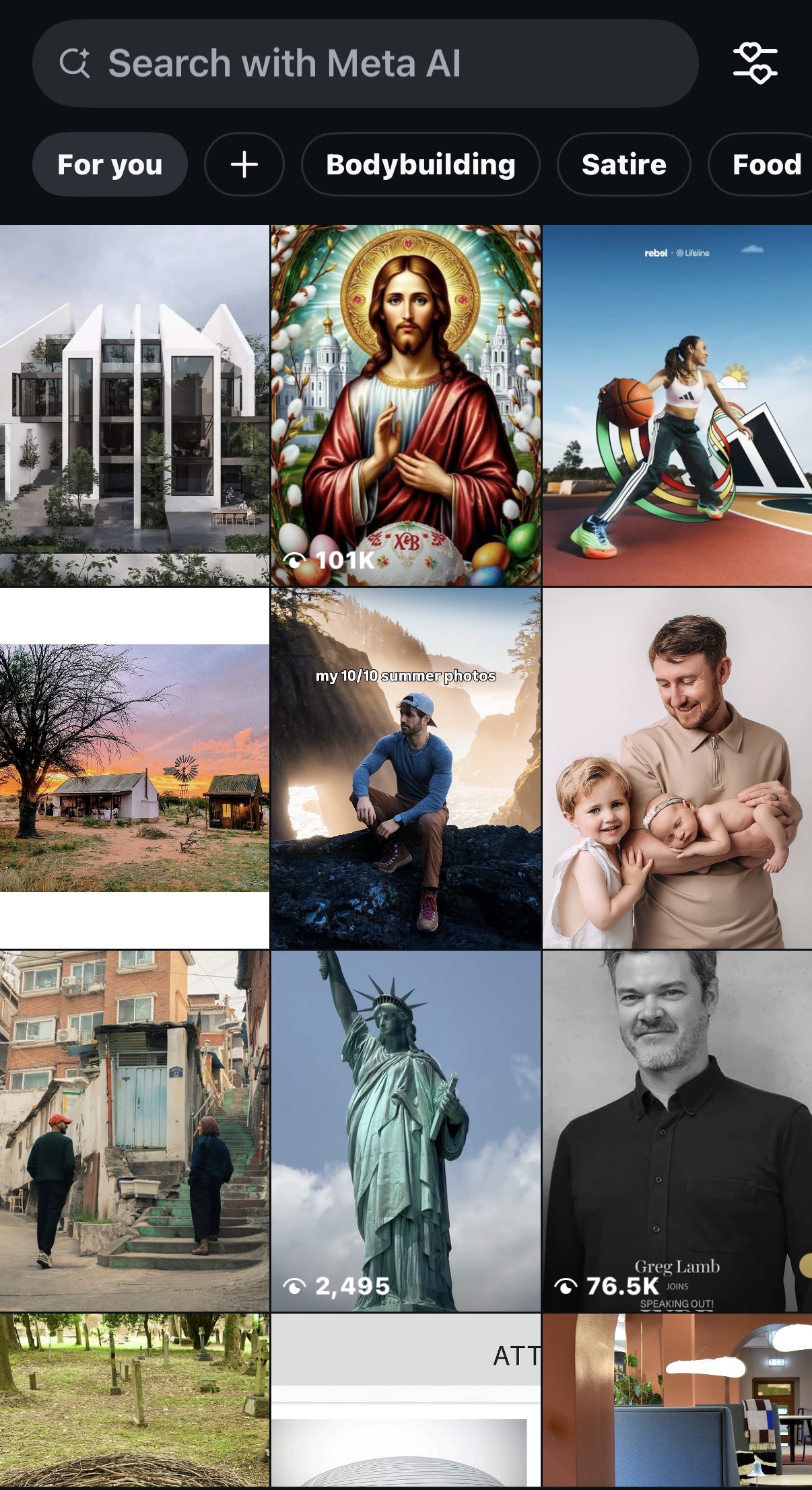
Facebook and Instagram are not new platforms trying to earn attention. They are the places attention already lives.
Together, they reach more than 3 billion people globally and have become fundamental tools in how the world connects, communicates, and consumes content. For billions of users, Meta platforms are not destinations. They are habits, opened dozens of times a day, often without conscious intent.
Launching in 2004 and 2010 respectively, Facebook and Instagram give Meta more than two decades of behavioural data across markets, cultures, and content formats at an unprecedented scale. Few platforms in history have had this level of exposure to how humans actually behave in-feed.
Crucially, that behaviour has been shaped by creators. Meta has consistently scaled formats people actively choose to engage with, and those formats have almost always been creator-led or user-generated. As Melwin Mathews, Product and Platforms Manager at Fabulate, explains, “the platform rewards content that feels like it belongs in the feed, not content that looks like it has been placed there.”
That foundation has reshaped advertising entirely.
Meta has shifted marketing away from broad, static messaging and into a live, performance-driven creative environment that borrows its cues from creators. Content is judged in milliseconds, in-feed, by audiences with little tolerance for interruption that feels forced or unnatural. Feedback is immediate. Failure is fast. Success, when content aligns with how people already engage, scales aggressively.
This is why getting creative right on Meta is so difficult for brands.
Much of brand creative is still optimised for polish, consistency, and internal approval. Meta rewards speed, clarity, and interruption that feels native to the feed. When creative is designed to satisfy guidelines before behaviour, performance suffers. “On Meta, that order needs to flip,” Melwin notes. “The audience decides almost instantly whether your creative deserves to exist, and the platform responds to that decision immediately.”
The issue is not effort. It is a mismatch between how brands design assets and how people actually behave on the platform.
After analysing thousands of high-performing ads and creator-led campaigns, clear patterns emerge. Not platform best practices. Not aesthetic trends. Unspoken rules that consistently separate ads that disappear from ads that scale.
This guide breaks them down.
From platform reality to creative rules
If Meta has been built on the back of creator-led, human content, then advertising success comes down to a simple question.
Does your creative behave like the content people already choose to engage with?
When high-performing Meta ads are analysed through that lens, the same patterns appear again and again. They are not about production quality or brand polish. They are about attention, interruption, and momentum. The ads that win rarely feel like ads at all. They behave like content people already watch, which makes performance far more predictable.
Those patterns form the unspoken rules of high-performing Meta ads.
.png)
Rule 1: The hook must exist at 0 seconds
The first frame is the decision point.
Not one second in. Not once the video starts moving. The very first frame. Even a brief delay materially reduces click-through rate because the brain has already decided to keep scrolling.
By the time most ads reach their message, the decision has already been made. The hook is not the start of the ad, it is the ad. Mathews explains, “by the time most ads get to their message, the decision has already been made.”
What works is immediate problem visualisation, direct eye contact, bold tension-driven text, or clear action in-frame. What fails are logos, static product shots, and slow cinematic intros.
Placement matters as much as message. Text placed in the top third of the frame consistently outperforms other placements, because that is where eyes naturally land on mobile.
Rule 2: Short wins, but only if it moves
The highest-performing Meta video ads cluster between 11 and 15 seconds.
Shorter does not automatically mean better. Faster does.
The brain needs new information every 3 to 4 seconds to stay engaged. Ads built as a single continuous scene underperform. Ads with 2 to 6 scene changes perform best because they continually reset attention.
Think in beats, not duration. If nothing changes visually or narratively for more than three seconds, the scroll wins.
Rule 3: “On-brand” is often the enemy
Most brand colour palettes were not designed for performance feeds.
Brand systems are built for environments where attention is already granted, such as websites, packaging, and traditional media. Meta feeds work in the opposite way. Attention is not given, it is taken.
In-feed, muted tones, minimal whites, and safe brand colours blend into an already crowded visual environment. They do not signal urgency or relevance. They become camouflage. Contrast matters more than cohesion.
There is a clear tension between brand comfort and performance. The more an ad conforms to traditional brand aesthetics, the easier it becomes for users to ignore, a pattern that shows up repeatedly in underperforming creative.
High-saturation colours, harsh lighting, and visually loud frames win because they interrupt the scrolling pattern. The brain notices difference before it processes meaning, and that moment of disruption buys attention.
The goal is not to abandon brand identity, but to separate brand consistency from performance execution. Brand guidelines are designed for recognition. Performance feeds are designed for interruption.
If your ad looks tasteful, there is a strong chance it is invisible.
.png)
Rule 4: Design for reading, not admiring
Meta ads are not being studied. They are being glanced at.
Winning ads prioritise legibility over beauty. Large text, bold sans-serif fonts, strong contrast, and semi-transparent text boxes consistently outperform more delicate design choices.
Captions are mandatory, with most users watching without sound. If your message relies on audio, subtlety, or fine detail, you are already asking too much of the feed.
Rule 5: The opening frame carries the entire ad
Before motion. Before sound. Before pacing. The opening frame alone determines performance.
What works
- Immediate action
- A problem made visual
- Close-up faces showing emotion
- Tension that demands resolution
What fails
- Logos
- Product flat lays
- Lifestyle stills
- Anything static
If the first frame would not stop you scrolling, it will not stop anyone else.
Why creator content keeps winning
None of these patterns are accidental.
They mirror how creator content has trained audiences to consume video on Meta. Fast hooks, visible faces, imperfect production, and immediate payoff are learned behaviour. “Creator content works because it doesn’t ask people to change how they consume content,” Mathews explains. “It meets them exactly where they already are.”
The best ads do the same.
Rule 6: Audio accelerates performance, not understanding
Audio should enhance momentum, not explain the ad.
Music combined with immediate, energetic voiceover consistently outperforms calm, authoritative delivery. The key is designing for silence first, then letting audio multiply performance.
Rule 7: Polished loses to human
User-generated style content consistently outperforms studio shoots.
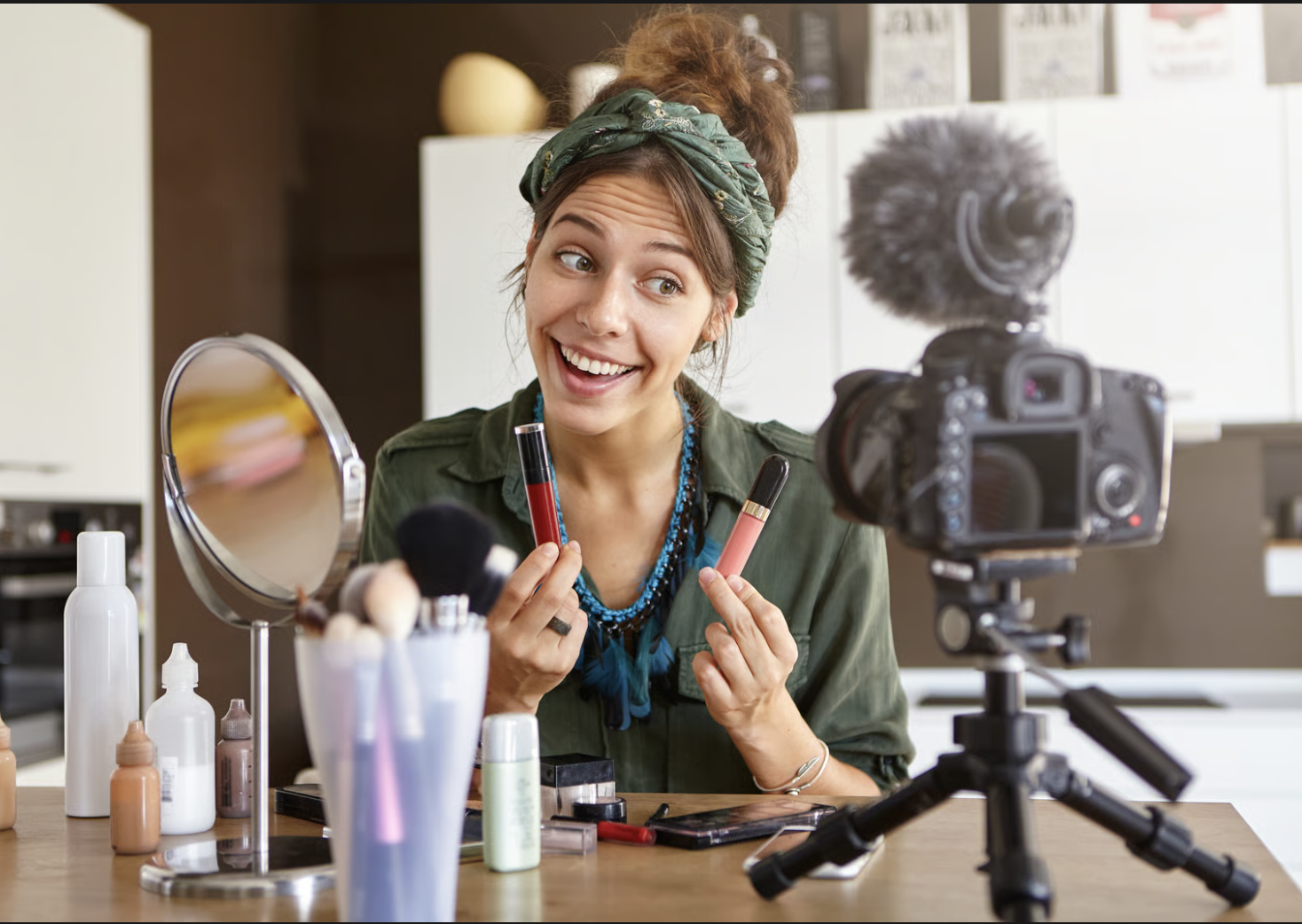
Phone cameras beat cinema cameras. Imperfect lighting beats controlled sets. Real environments beat constructed ones. The feed is a social environment. Content that looks like ads gets treated like ads. Content that looks human gets watched.
Rule 8: Interrupt the pattern or be ignored
Scrolling is automatic. Attention is not.
Effective Meta ads deliberately break rhythm through jump cuts, text slams, audio shifts, or sudden visual changes. Subtlety does not win. Disruption does.
Rule 9: Show the product early and in context
Your product should appear within the first 1 to 3 seconds.
Do not tease it. Do not hide it. Meta rewards clarity.
Show scale through hands or people. Where relevant, before and after visuals remain among the highest-performing formats across categories.
Transformation sells faster than explanation.
.png)
A proven 15-second Meta ad structure
When these rules are applied together, high-performing Meta ads tend to follow a predictable narrative arc.
- 0–3 seconds: The hook
Problem visualised immediately. High contrast. Text in the top third. - 3–7 seconds: The solution
Product demonstrated in use. Human interaction. - 7–11 seconds: The result
Social proof, before and after, or visible outcome. - 11–15 seconds: The close
Clear, confident call to action.
This structure works because it reflects how attention actually behaves in-feed.
The takeaway
Meta ads are designed to earn attention, not admiration. They are about earning attention, resetting it repeatedly, and rewarding it quickly.
The brands that scale are the ones willing to let their creative behave more like creators and less like campaigns. As Melwin summarises, “when brands stop fighting the feed and start designing for it, performance becomes far more predictable.”
Design for behaviour. Design for interruption. Design for the feed, not the brand book.
That is how Meta ads scale.
.jpg)









.png)

.png)
.png)
.png)
.png)
.png)
.png)
.png)
.png)
.png)
.png)
.png)
.png)
.png)
.png)
.png)
.png)
.png)
.png)
.png)
.png)
.png)
.png)
.png)
.png)
.png)
.png)
.png)



.png)