How to run an influencer marketing campaign that works
Fabulate explains how brands can run influencer marketing campaigns that work, from strategy and creator briefs to approvals, KPIs and live tracking.
Influencer campaigns have moved well beyond the one-off paid post.
As creators become a bigger part of brand media plans, campaigns now require the same level of strategy, structure and measurement as any other major channel, with one important difference: creators are people, not placements.
What actually needs to be locked in before you reach out to creators?
Step 1: A process
Before you brief a single creator, you need to know who will actually run the campaign.
That means having either an internal team or a creator partner who owns the workflow end-to-end, not just the creative idea, but the operational engine behind it.
Step 2: Infrastructure
Influencer campaigns are not just about finding someone with an audience.
They involve discovery, vetting, contracting, usage rights, approvals, feedback rounds, payments, tax, super and reporting.
All of that needs infrastructure.
Step 3: An honest read on resourcing
Brands need to ask themselves: how much time, headcount, and capability do we genuinely have to manage this properly?
From there, the build-or-partner decision becomes clearer. Can the brand realistically run the full creator workflow in-house, or does it need a specialist creator partner to carry the operational load?
What does a well-run influencer campaign actually look like?
Fabulate’s Eliza Lewis (Commercial Director ANZ) says the best campaigns may look effortless from the outside, but behind the scenes, they are anything but simple.
The reality, Lewis says, is that “brilliant campaigns are the result of dozens of moving parts aligning at exactly the right time.”
- Strategy
A strong campaign begins with more than an objective or media plan. It starts with a compelling strategy that sells the overarching vision.
Everyone involved, from brand teams to creators, needs to understand what the campaign is doing, why it matters and what success looks like.
Lewis adds that the strongest campaigns have a clear north star that guides every decision, from concept development through to reporting.
- Creator brief
From there, the strategy is translated into the creator brief. Great briefs are an art form.
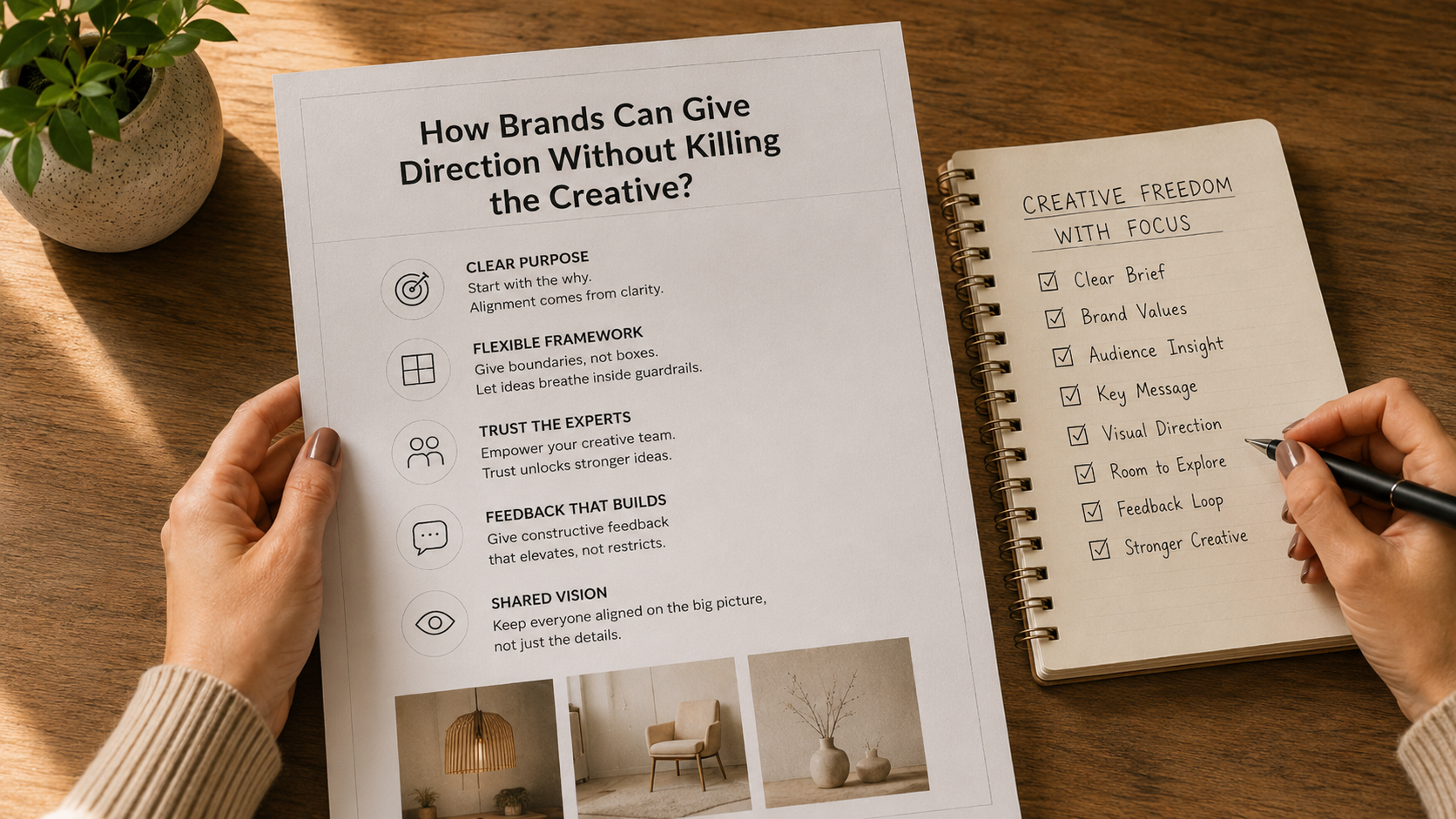
A strong brief gives creators crystal-clear guidance on the brand objective, key messages, mandatory inclusions and non-negotiables. But it also leaves enough room for creators to do what they do best.
The goal is not to script the content.
It is to create a framework that enables authentic storytelling.
Click here to read Fabulate’s in-depth guide on how to write a perfect creative brief.
- Operational excellence
The campaigns that run smoothly have every milestone mapped out well in advance: creator outreach, approvals, content deadlines, feedback rounds, publishing windows, reporting frameworks and everything in between.
Nothing is left to chance.
- Clear communication
Communication matters just as much.
Everyone needs to know what is happening, when it is happening and who is responsible for the next step.
Lewis says surprises are minimised when expectations are aligned from day one.
- The right creators
When the right talent is selected and given the right brief, something special happens.
Creators take a brand message and turn it into something human. Something relatable. Something emotional. Something educational. Something that actually resonates with their audience.
The best creators do not simply deliver content. They deliver connection.
- Strong measurement and reporting
Reporting needs to go beyond impressions, reach and engagement.
Brands need to understand:
- What worked
- What audiences responded to
- Which creators drove impact
- What insights should shape the next campaign
As Lewis puts it, the best campaigns do not end when content goes live. They create learnings that make every future campaign stronger.
Where do campaigns most often go wrong behind the scenes?

Campaigns rarely fall apart because of one big, dramatic mistake.
More often than not, they go wrong because the unglamorous groundwork was not done properly before anything went live.
- Weak brand safety checks
Brands need to dig into creators before approving them: their past content, previous associations, public comments, values and what they have shared online.
You do not want someone representing your brand if you have not properly vetted them.
That is where the nasty surprises tend to live.
- Not interrogating the audience data
Follower count is not enough.
A creator can have a large audience and still be completely wrong for the campaign. Brands need to look more deeply at where the audience is based, how old they are, whether they match the target consumer, and whether the engagement is genuine.
You can have the right content, the right timing and the right creative, but if the audience is wrong, the campaign will hit the wrong room.
- Vague deliverables
Unclear deliverables create problems later.
“A couple of posts” is not a brief. Before work begins, brands need to be clear on exactly what is being delivered.
That includes the number of assets, platforms, formats, timings, posting windows, captions, links, tags, disclosure requirements, approval process and usage rights.
If these details are not clear upfront, brands risk getting something technically delivered but practically useless.
- Unclear dos and don’ts
Creators need creative freedom, but they also need clear boundaries.
If the guardrails are unclear, brands cannot be surprised when creators cross a line they did not know existed.
Brands should spell out the dos and don’ts before content is created.
Ambiguity at the brief stage often becomes conflict at the approval stage.
Most behind-the-scenes campaign issues stem from steps skipped at the beginning. Brand safety checks, audience verification, clear deliverables and explicit guardrails are not just admin. They are what make the campaign work.
How should brands decide which KPIs matter before the campaign begins?

“Start with the objective and work backwards,” Lewis says.
A KPI is the objective made measurable. If brands pick metrics first, they end up chasing numbers that look good in a report but mean very little to the business.
1. Anchor it to the real goal
Before choosing any metric, brands need to be clear about the campaign's role.
Is it designed to build awareness? Shift consideration? Drive traffic? Generate leads? Convert sales?
Each objective needs a different measure of success. Reach and views may matter for awareness, while saves, shares, clicks, sign-ups, promo code redemptions, or sales may matter further down the funnel.
The campaign goal should decide the KPI, not the other way around.
2. Separate vanity from value
Likes and follower growth can be useful signals, but they are not always proof of impact.
Brands need to be honest about which numbers they would defend to a CFO, and which ones simply make the deck look busy.
3. Pick one primary KPI
Every campaign needs one main measure of success.
That is the verdict.
Everything else is diagnostic. Supporting metrics should explain why the campaign worked, where it worked and what could be improved.
If everything is a priority, nothing is.
4. Make sure it can be measured
A KPI you cannot track is a wish.
Before launch, brands need to lock in tracking links, promo codes, UTMs, platform access, creator reporting and a clear baseline.
Attribution cannot be cleanly rebuilt after the campaign is already live.
5. Set the benchmark early
“Good” means nothing without a number to beat.
Success should be agreed before launch, based on past campaigns, category norms or a clear test hypothesis. Otherwise, the goalposts move once the results come in.
6. Match the KPI to the creator’s role
Not every creator should be judged the same way.
Some drive reach. Some drive trust. Some drive saves, comments, clicks or sales.
Measure creators against the job they were chosen to do.
Brands need to decide what winning looks like, in a number, before briefing a single creator.
KPIs set after launch are not a strategy. They are post-rationalisation.
How do you manage approvals and feedback?
Approvals are where good campaigns can quietly lose momentum.
Not because the content is wrong, but because feedback is slow, unclear or overworked.
The fix is structure from the start.
1. Set clear timelines upfront
Everyone should know when drafts are due, when feedback is due, when revisions are due and when content goes live.
Clear turnaround windows stop approvals from becoming an open-ended process that eats into launch dates.
2. Filter feedback through the objective
Every note should come back to one question: Does this help the campaign do what it set out to do?
If the answer is yes, include it.
If it is just personal preference, drop it.
That discipline removes a lot of unnecessary noise.
3. Consolidate feedback into one voice
Creators should not receive five different opinions from five different stakeholders. Brands need to align internally first, resolve any contradictions and then send a single set of clear notes.
4. Be specific
Vague feedback slows everything down —“Make it pop more” is not useful.
“Bring the product into the first three seconds so the message lands earlier” gives the creator a clear action to take.
5. Protect the creator’s voice
Feedback should sharpen the content, not strip out the personality brands paid for. If the edits make the creator sound like the brand instead of themselves, the content becomes weaker.
6. Cap the revision rounds
Agree upfront on how many rounds of feedback are included.
It keeps everyone focused and stops the campaign from drifting into endless edits, saving time, money and goodwill.
Good approvals are not about controlling the creator.
They are about keeping the campaign clear, on time and true to the strategy, without killing the creative.
What should brands be tracking while the campaign is live?
Live campaigns give brands the chance to course-correct while it still matters.
But that is only possible if they are actually watching. That is where Fabulate’s API-connected analytics come into play, allowing teams to see performance in real time as it unfolds.
Key metrics include:
- Views: Is the content reaching enough people?
- View-through rate: Are people watching or swiping away?
- Engagement quality: Are people saving, sharing, commenting or clicking, not just liking?
- CPC, CPV and CPE: Is the campaign spending efficiently?
- Creator performance: Which creators are driving the strongest results?
- Performance against the objective: Are the live numbers supporting the original strategy?
Brands can reallocate spend, double down on what is working, fix what is not, and steer the campaign while it is still live, rather than waiting for a “post-mortem” to explain what went wrong.
.jpg)










.png)

.png)
.png)
.png)
.png)
.png)
.png)
.png)
.png)
.png)
.png)
.png)
.png)
.png)
.png)
.png)
.png)
.png)
.png)
.png)
.png)
.png)
.png)
.png)
.png)
.png)
.png)
.png)
.png)



.png)