How to choose an influencer marketing agency: the questions that actually matter
The questions brands should ask when choosing an influencer marketing agency, from proprietary technology and creator selection to fees, data and outcomes.
US creator ad spend is on track to hit $44 billion in 2026, and 48% of creator ad buyers now label the category a “must buy.”
Finding an influencer marketing agency sounds easy on paper.
But finding one with the technology, data, transparency and human expertise to build a genuine competitive advantage is much harder than you might realise.
That is the ‘Trojan horse’ many brands fall for.
Most agencies can access creators, manage campaigns and produce reports. Many also describe themselves as “tech-enabled”. But access to creators is no longer a strategy, and subscribing to a third-party platform is not the same as owning technology.
These are the questions that actually matter.
Does the agency have proprietary technology?
.jpeg)
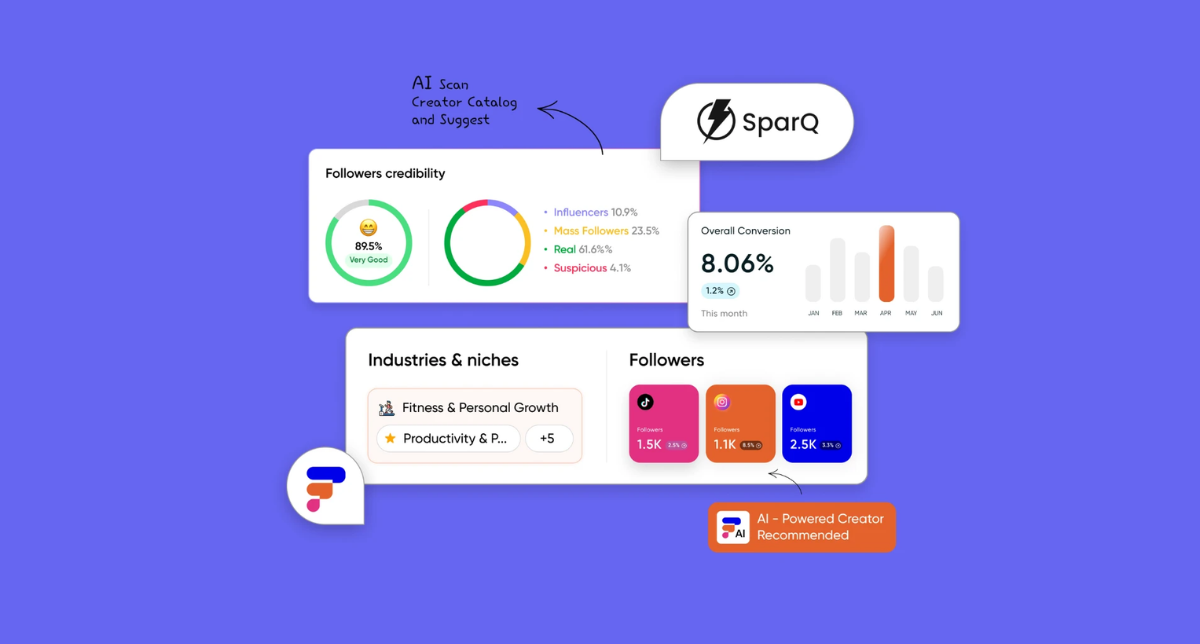
Technology has become one of the biggest differentiators in creator marketing, but not all technology is created equal.
Many agencies will tell you they have a “platform”.
In reality, they license someone else’s software, superimpose their logo and include the cost in their fees.
There is nothing inherently wrong with using third-party technology. But brands should know whether they are paying for genuine product capability or simply funding another software subscription.
The real question is whether the agency’s technology can solve your specific problems.
Can it integrate with your internal systems? Can it develop features around your business? Can it evolve as your creator programme grows? Or is the agency constrained by a third-party vendor’s roadmap?
Ask:
- Can we see the technology in action?
- Will our team have direct access?
- Is it proprietary or white-labelled?
- What are its limitations?
- How large is the product and engineering team?
- Can you build custom functionality for our business?
When the answer is, “We will need to ask our software provider,” you are not buying technology capability.
You are buying access to somebody else’s product, and it might be money better spent in-housing that into your own marketing operations.
How does it select creators beyond followers and engagement?

Follower count and engagement are table stakes. Almost every creator platform can prove them.
Modern creator discovery should consider signals including:
- Audience quality and authenticity
- Audience overlap
- Brand and category affinity
- Content quality
- Historical performance
- Cultural relevance
- Brand-safety and compliance risks
- Posting behaviour
- Predicted campaign performance
Finding creators is no longer difficult; Finding the right creator before your competitors do is.
An agency should be able to explain why each recommendation fits the campaign objective, rather than simply presenting a list of popular profiles.
When its methodology begins and ends with engagement rate, it is operating with a playbook from five years ago.
Can it recommend creators outside its own roster?
Or you can call it the creator industry’s biggest conflicts of interest.
Talent agencies naturally have to recommend the people they represent. Creator agencies often return to creators they already know and have worked with.
Neither approach automatically decides the best outcome for the brand.
A creator strategy should not be limited by an agency’s existing commercial relationships.
With an enormous global creator market across TikTok, Instagram, YouTube and Facebook, searching only within a familiar roster gives brands access to a tiny fraction of the available talent.
The best creator is not necessarily the one the agency has used before. It is the one that is right for the campaign.
Brands should ask how wide the agency’s discovery process goes, whether represented creators are prioritised and how potential conflicts are disclosed.
How does its technology improve the entire campaign?
Technology should do more than make reporting look prettier. It should remove friction throughout the campaign.
The strongest creator platforms automate repetitive work so strategists and marketers can spend more time on ideas, relationships and commercial outcomes.
Ask how the agency’s systems support:
- Creator discovery
- Brand-safety screening
- Compliance checking
- Contracting
- Content approvals
- Campaign management
- Payments
- Reporting
More importantly, ask what makes its methodology different.
Every agency claims to be thorough. Far fewer can explain the systems they have built to deliver that consistency across hundreds or thousands of campaign decisions.
Good technology does not replace the people running the campaign.
It brings order to campaign chaos.
Can it connect creator activity to business outcomes?
Likes do not pay invoices.
Views do not automatically grow businesses.
Creator marketing has matured to the point where it should be measured against the same commercial expectations as other media channels.
The agency should be able to explain how creator activity contributed to the outcome that matters to the brand, whether that is:
- Sales
- Leads
- Conversions
- App installations
- Website behaviour
- Brand lift
- Customer acquisition
- Paid-media performance
That does not mean every campaign should be judged solely on immediate sales. Awareness, consideration and cultural relevance remain legitimate objectives.
But the metrics should reflect the job the campaign was designed to perform.
When reporting stops at impressions and engagement, the agency is measuring activity rather than impact.
Brands do not buy creators.
They buy business outcomes.
How transparent is it about fees and creator payments?

This is often the question that provides clarity and separates genuine partners from margin businesses.
There is nothing wrong with an agency charging management fees, platform costs or commissions. Good partners create value and should be paid accordingly.
The issue is not cost; it is transparency.
Brands should know the following:
- What each creator is being paid
- What the agency is earning
- Which technology fees are included
- Whether any commissions or mark-ups apply
- Where every pound of the budget is going
An agency should be able to explain its commercial model clearly without becoming defensive.
Transparency builds trust. Opacity protects margins.
What does its human expertise add?

Here is the honest truth: technology can identify creators faster than any human involvement. It can analyse audiences, automate workflows, reduce risk and surface patterns across campaign data.
It cannot replace judgment.
The best agencies combine the best of both worlds: exceptional technology and people who understand culture, creativity and relationships.
They know when to challenge a brief. They can recognise an idea that an algorithm may never recommend. They understand cultural shifts before those shifts appear clearly in the data.
They can also build trust with creators, navigate difficult negotiations and understand the context behind a brand’s commercial challenge.
Ask one simple question: If the technology disappeared tomorrow, what expertise would still remain?
The strongest partners will have a compelling answer.
Will the brand retain its data and learnings?
Every creator campaign generates intellectual property.
That includes:
- Audience insights
- Performance benchmarks
- Creative learnings
- Historical creator performance
- Campaign results
- Pricing and negotiation history
Those insights become more valuable with every campaign.
Brands should establish who owns the data, what they can access and what happens when the agency relationship ends.
Changing partners should not mean starting again from scratch. The strongest creator programmes become more intelligent over time because the knowledge remains with the brand.
That is how campaign experience becomes long-term competitive advantage.
The right influencer marketing agency should offer more than creator access and campaign management.
It should combine proprietary technology, meaningful data, transparent commercial practices and human judgment to improve every stage of the creator-marketing process.
.jpg)









.png)

.png)
.png)
.png)
.png)
.png)
.png)
.png)
.png)
.png)
.png)
.png)
.png)
.png)
.png)
.png)
.png)
.png)
.png)
.png)
.png)
.png)
.png)
.png)
.png)
.png)
.png)
.png)
.png)



.png)