8 AI tools shaping the future of creator marketing
AI is transforming creator marketing by helping brands streamline campaign management, reduce risk and turn every campaign into a learning opportunity. Explore the eight AI applications powering SparQ and how they help marketers scale creator programs without replacing the human judgment and creativity that drive great results.
As creator programs scale, AI is becoming the operating layer that helps brands move faster, reduce risk and make smarter decisions without removing the human judgment that makes creator marketing work.
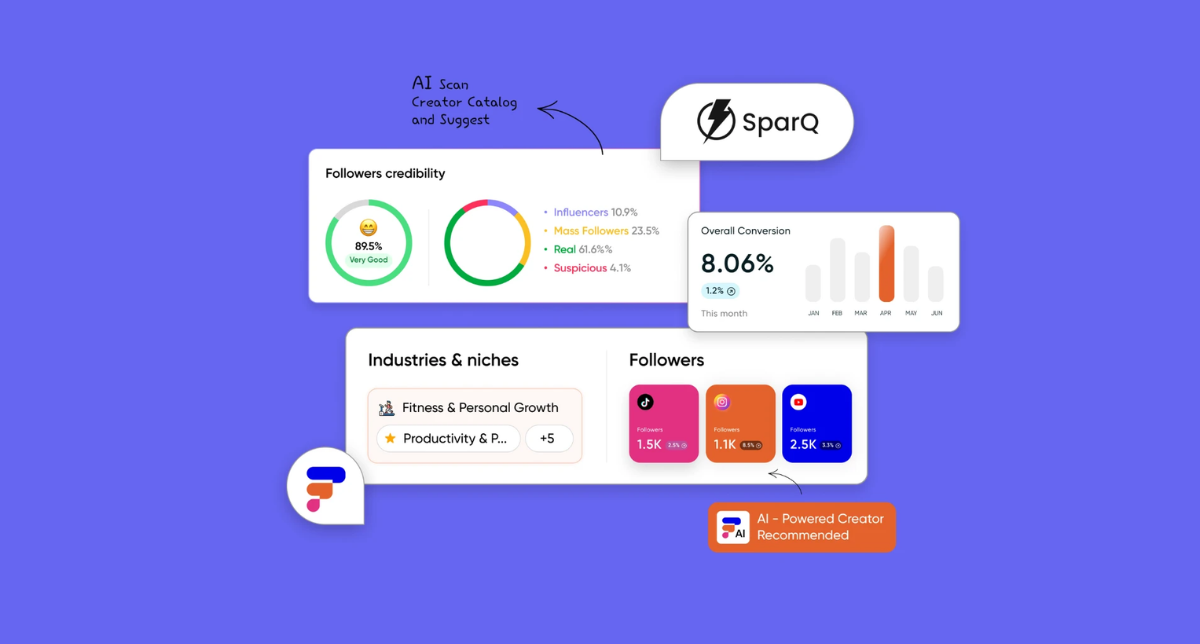
That is the thinking behind SparQ, Fabulate’s suite of AI applications for creator marketing.
Rather than one large AI product, SparQ is built as a series of modular tools, each designed to solve a specific challenge across the campaign lifecycle.
The goal is not to automate creators out of the process. It is to remove the repetitive work around them, so marketers can focus on strategy and creators can focus on what they do best: being creative.
How does AI support creator marketing?
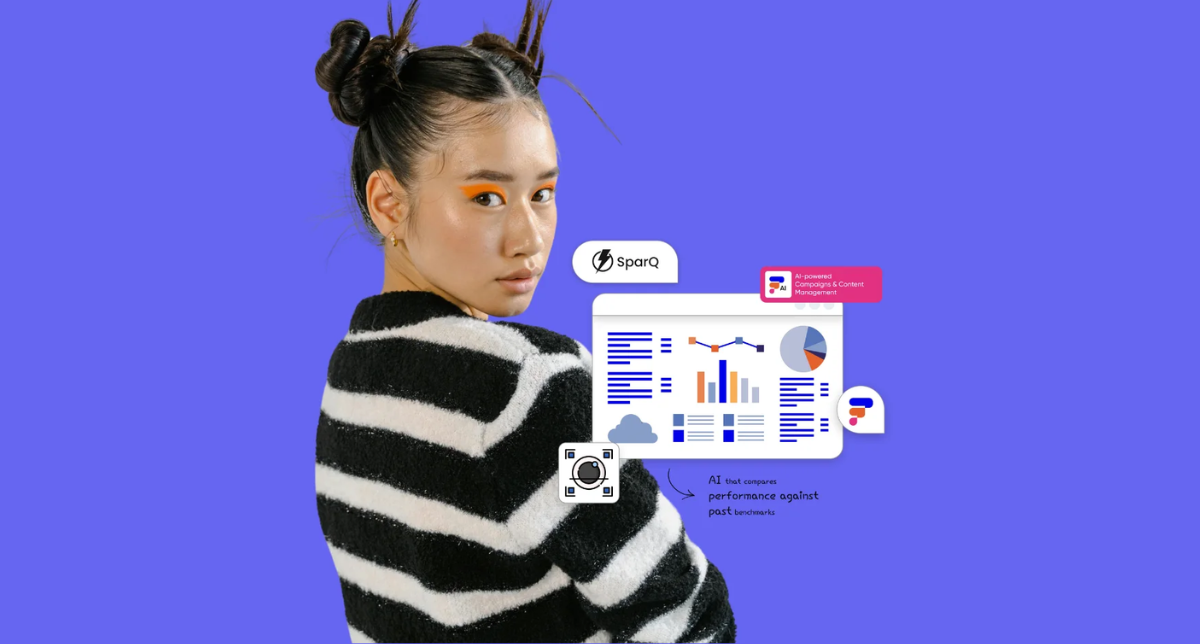
AI is often discussed as a discovery tool. But in creator marketing, the bigger opportunity sits across the full campaign workflow.
Once creators have been selected, brands still need to manage briefs, approvals, compliance, content quality, reporting and optimisation across hundreds or even thousands of individual assets.
That is where AI can save a lot of time.
- It can flag risk before a campaign goes live.
- It can identify duplicate audiences.
- It can check content against a brief.
- It can surface performance patterns.
- It can help brands understand which creators, formats and messages are actually working.
Most importantly, it can help every campaign learn from the one before it.
Instead of campaign insights being buried in old reports, AI can turn them into an intelligence layer that informs future creator selection, creative recommendations and campaign optimisation.
1. Brand Safety
Best for: Reducing creator risk before a campaign begins.
Brand Safety helps brands identify creator content, behaviours and associations that may present reputational risk.
This is often the natural starting point for brands adopting AI because it solves an immediate governance problem without requiring teams to change their entire workflow.
Before a brand invests in a creator partnership, it needs confidence that the creator is suitable, credible and aligned with the brand’s risk expectations.
Why it matters:
Creator marketing moves fast, but reputational risk moves faster. Brand Safety helps teams make faster decisions without skipping due diligence.
2. Brand Advocate
Best for: Understanding genuine brand alignment.
Brand Advocate helps brands assess whether a creator has shown historical advocacy or natural alignment with a brand.
That matters because the best creator partnerships do not feel forced. They work when the creator already has credibility in the category, understands the product or has a natural reason to talk about the brand.
This moves creator selection beyond surface-level metrics.
Why it matters:
The strongest partnerships are not just about who can reach the audience. They are about who can speak to that audience with credibility.
3. Audience Overlap
Best for: Building smarter creator mixes.
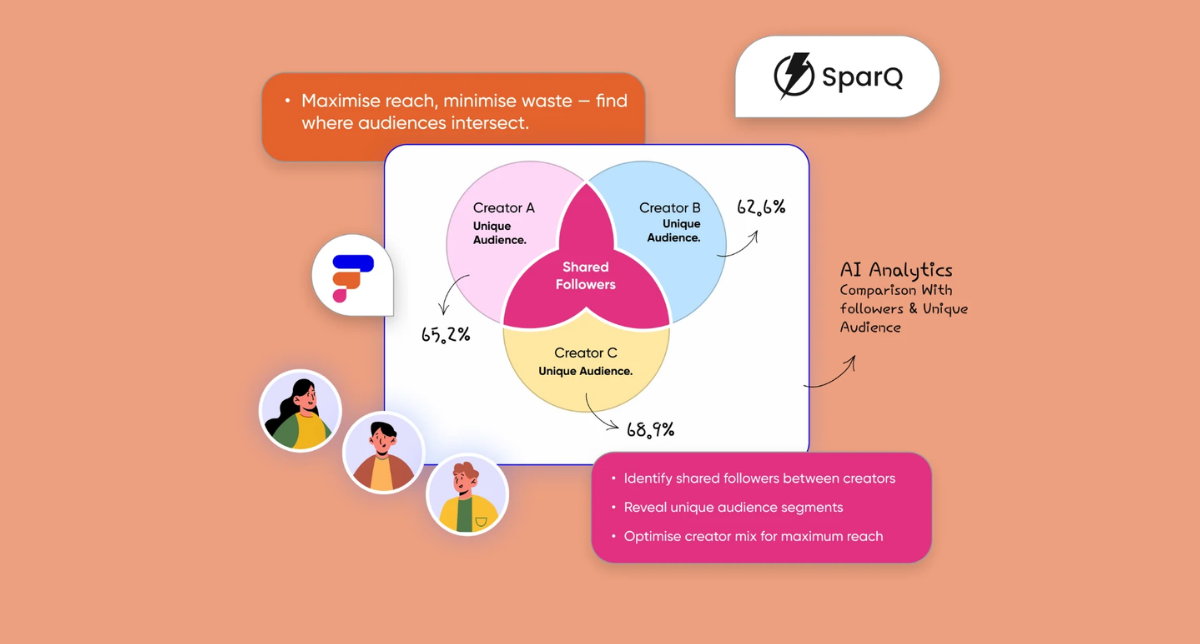
Audience Overlap helps brands understand where creator audiences duplicate and where they deliver incremental reach.
This is especially important when brands work with multiple creators in the same campaign. Without this visibility, teams may assume they are reaching new people when they are actually paying to reach the same audience repeatedly.
Why it matters:
A good creator mix is not just about reach. It is about efficient, relevant and incremental reach.
4. Creator AI Search
Best for: Finding creators using natural language and visual search.
Creator AI Search changes how discovery works.
Instead of relying solely on manual filters, brands can search for creators in a more intuitive way, using natural language and visual cues to identify talent that fits their brand, audience, category, or campaign moment.
This makes discovery faster, but also more strategic.
Why it matters:
The future of discovery is not just finding more creators. It is finding better-fit creators faster.
5. Pulse
Best for: Understanding share of voice and creator-led conversations.
Pulse helps brands measure share of voice and understand how creators are shaping conversations around a brand, category or cultural moment.
This gives teams a clearer view of where the brand sits in the conversation and which creators are influencing the narrative.
Why it matters:
Creator marketing is not just about content output. It is about understanding who shapes attention, trust, and conversation in the market.
6. Echo
Best for: Spotting emerging trends and knowing how long they may last.
Echo helps identify emerging trends and predict how long they are likely to remain culturally relevant.
That matters because not every trend deserves a brand response. Some are short-lived moments. Others signal deeper shifts in audience behaviour.
Echo helps brands move faster, but with more context.
Why it matters:
The best brands do not just chase trends. They understand which trends are worth acting on.
7. Compliance Check
Best for: Reviewing creator content against rules, briefs and brand requirements.
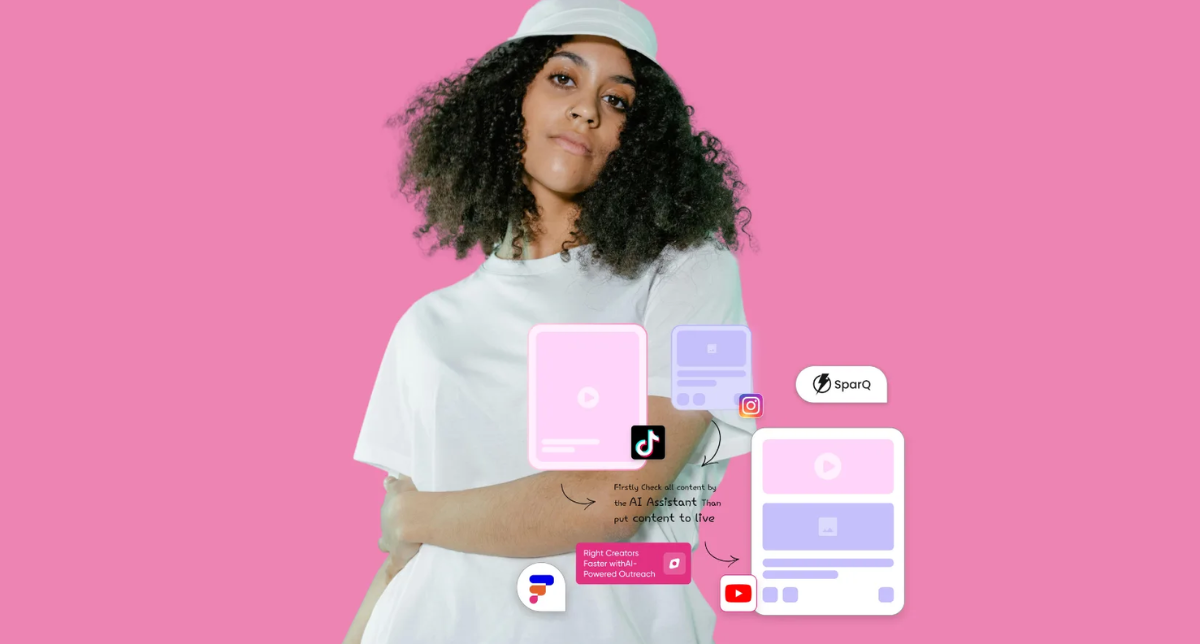
Compliance Check automatically reviews creator content against campaign briefs, brand guidelines and regulatory requirements.
This is becoming increasingly important as creator marketing moves into more regulated, scrutinised and brand-sensitive environments.
Compliance cannot sit at the end of the process anymore. It needs to be built into the workflow.
Why it matters:
The faster creator marketing moves, the more important it becomes to make compliance scalable.
8. Lens
Best for: Understanding what creative choices drive performance.
Lens analyses campaign outcomes and identifies the creative characteristics that drive performance across campaigns.
This helps brands move beyond simple reporting and into creative intelligence.
Instead of only knowing which creator performed best, brands can begin to understand which formats, hooks, visual styles, messages, and storytelling patterns drive results.
Why it matters:
The most valuable campaign report is not just what happened. It is what the brand should do next.
Where to start?
For many brands, Brand Safety is the easiest and most valuable place to begin. It solves an immediate need, reduces reputational risk and fits naturally into existing approval workflows.
From there, brands can expand into Compliance Check, Audience Overlap, Creator AI Search and more advanced intelligence tools like Echo and Lens.
Don’t adopt AI everywhere at once. Start with one workflow where AI can remove repetitive manual work. Build trust. Then extend it into more strategic areas.
The takeaway
The biggest shift in creator marketing is not just another AI tool. It is the rise of agentic AI.
Generative AI has largely been about creating content. Agentic AI is different. It is about completing work.
Instead of asking AI to write a document or summarise information, agentic systems can understand an objective, make decisions within clear guardrails and complete multi-step workflows for marketing teams.
Read more: What are the guardrails of AI? What are AIGC creators?
In creator marketing, that could change everything.
An AI agent could analyse a brief, identify suitable creators, assess historical brand affinity, forecast likely performance, recommend budgets, monitor compliance during production, spot emerging trends mid-campaign, evaluate results against previous campaigns and suggest what to do next.
The important part is that marketers stay in control of the final decisions.
AI does not replace the team. It becomes another member of it. That is where the real value sits.
Not replacing creativity. Not replacing creators. Not replacing strategic thinking.
But removing the operational complexity that has historically limited scale, while helping every campaign become smarter than the last.
.jpg)










.png)

.png)
.png)
.png)
.png)
.png)
.png)
.png)
.png)
.png)
.png)
.png)
.png)
.png)
.png)
.png)
.png)
.png)
.png)
.png)
.png)
.png)
.png)
.png)
.png)
.png)
.png)
.png)
.png)



.png)